

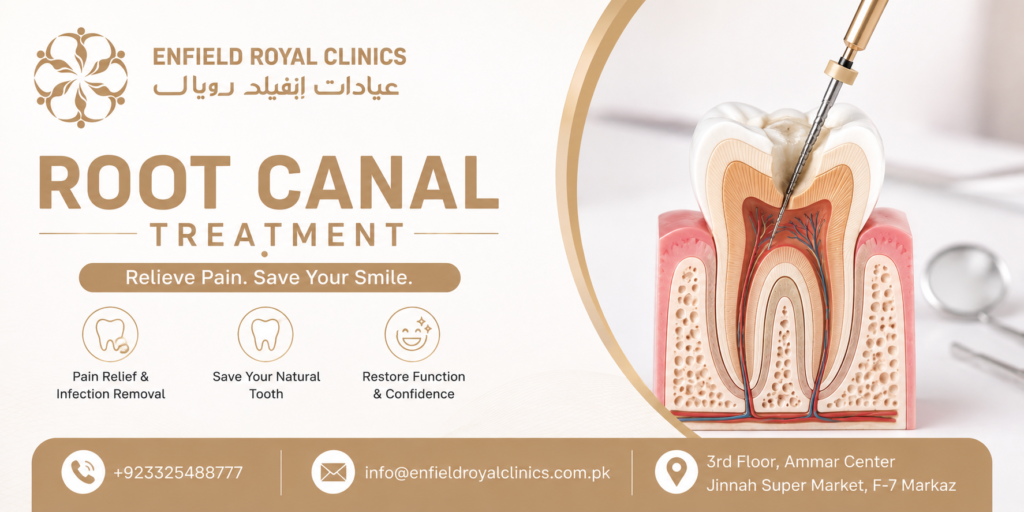
A tooth infection can cause persistent pain, sensitivity, swelling, and discomfort while eating. When bacteria reach the soft tissue inside a tooth, the infection may continue developing unless the source is treated. One of the main procedures used in this situation is Root Canal Treatment, which focuses on removing infected tissue from inside the tooth and cleaning the internal canals.
The purpose is not simply to reduce pain. Proper treatment aims to eliminate the source of infection, seal the tooth, and give the surrounding tissues an opportunity to heal. When the tooth remains structurally restorable, this approach can often help preserve it instead of removing it.
How Does a Tooth Become Infected?
A healthy tooth has several protective layers surrounding the pulp, which contains nerves, blood vessels, and connective tissue. Problems can begin when deep decay, a crack, or an injury allows bacteria to reach this inner area.
Once microorganisms enter the pulp, inflammation may develop. If the condition progresses, the pulp can become infected and eventually lose its vitality. Bacteria can then move through the root canals toward the tissues surrounding the tooth.
The infection may cause toothache, prolonged sensitivity, pain when chewing, swelling, or an abscess. However, some infected teeth produce very few noticeable symptoms.
What Happens Inside an Infected Tooth?
The pulp is contained within a hard space inside the tooth. When it becomes inflamed, pressure can build within this enclosed area, leading to significant discomfort.
As bacteria multiply, the infection can extend through the root canals. The surrounding tissues may then become inflamed, and an abscess can form near the root.
At this point, simply taking pain medication does not remove the bacteria or infected tissue. The source of the problem needs to be addressed by appropriate dental treatment.
How Does Treatment Remove the Infection?
During Root Canal Treatment, the dentist first numbs the affected area and creates a small opening in the tooth to reach the pulp chamber.
The infected or damaged pulp is carefully removed. Special instruments are then used to clean and shape the root canals. Disinfecting solutions may also be used to reduce bacteria and remove debris from the internal spaces.
After the canals have been adequately cleaned, they are filled and sealed. This creates a barrier that helps prevent bacteria from entering the treated spaces again.
By removing contaminated tissue and disinfecting the canal system, the procedure addresses the primary source of infection inside the tooth.
Can Treatment Help an Abscess?
Yes, when an abscess is caused by infection within a tooth, treating the internal source can help control the infection. Once the infected pulp is removed and the canals are cleaned and sealed, the tissues around the root can begin the healing process.
In some situations, an abscess may also require drainage. The dentist decides whether additional treatment is necessary based on the location and severity of the infection.
If there are signs that the infection has spread beyond the immediate tooth area, additional medical management may also be considered.
Are Antibiotics Enough?
Antibiotics can be useful in certain circumstances, but they do not generally remove infected pulp from inside a tooth. They may be prescribed when there is spreading infection, significant swelling, fever, or other signs of systemic involvement.
If the infected tissue remains inside the tooth, the underlying source may continue to cause problems after the medication course ends.
For this reason, antibiotics should not be viewed as a replacement for dental treatment when the infection originates inside the tooth.
Does the Infection Disappear Immediately?
The infection does not necessarily disappear the moment treatment is completed. The internal source is addressed during the procedure, but the tissues around the root may need time to recover.
Inflammation and swelling can gradually decrease as healing takes place. Some tenderness may remain for a short period, particularly when pressure is applied to the tooth.
Follow-up care helps the dentist monitor the healing process and confirm that the tooth is responding appropriately.
What Happens If the Infection Is Left Untreated?
An untreated tooth infection can become progressively more serious. Bacteria may spread from the root into surrounding bone and soft tissues, potentially causing an abscess or other complications.
In advanced cases, swelling may become more noticeable and pain may increase. The tooth can also become structurally weaker as decay and infection continue.
If the damage becomes too extensive to restore, extraction may eventually be necessary. Seeking treatment earlier may provide a better chance of preserving the natural tooth.
Can a Treated Tooth Become Infected Again?
A previously treated tooth can develop infection again, although successful treatment and proper restoration can provide long-term protection.
Reinfection may occur if a canal was not fully treated, if a new crack develops, if a filling or crown becomes damaged, or if bacteria enter through leakage around the restoration.
A tooth that becomes painful or swollen after previous treatment should be examined. Additional treatment, retreatment, or another procedure may sometimes be needed.
How Is the Tooth Protected After Treatment?
Cleaning the infection is only part of the process. The tooth also needs to be properly sealed and restored.
Depending on the amount of remaining structure, the dentist may place a permanent filling or recommend a crown. A crown can provide additional protection for a weakened tooth, particularly for molars that experience heavy chewing pressure.
A well-fitted restoration reduces the risk of leakage, further decay, and structural damage.
What Are the Signs the Infection Is Improving?
As healing progresses, symptoms such as severe toothache, swelling, and pressure sensitivity should generally decrease.
Patients may notice that chewing becomes more comfortable and that the gum around the tooth returns to its normal appearance.
However, persistent or worsening symptoms should not be ignored. Continued swelling, severe pain, drainage, or a recurring gum bump may indicate that further evaluation is needed.
How Can You Prevent Another Tooth Infection?
Good oral hygiene plays an important role in preventing new dental infections. Brush twice daily with fluoride toothpaste and clean between the teeth regularly.
Routine dental examinations can help identify cavities, cracks, and failing restorations before they become serious. Limiting frequent sugary foods and drinks can also reduce the risk of tooth decay.
Avoiding habits such as chewing ice or very hard objects can help protect teeth from fractures that may allow bacteria to enter.
Final Thoughts
Yes, Root Canal Treatment can remove the source of infection inside a tooth by eliminating damaged pulp, cleaning the root canals, and sealing them against further bacterial contamination. It can also help control infections that have contributed to an abscess when the tooth remains suitable for restoration.
The treatment does not guarantee that every infected tooth can be saved, but timely professional care can improve the opportunity to preserve the natural tooth. If you have persistent tooth pain, swelling, prolonged sensitivity, or signs of an abscess, a dental examination can determine the cause and guide you toward the appropriate treatment.
For more information visit Enfield royal clinic in islamabad

Leave a Reply